Peptide comparison engine
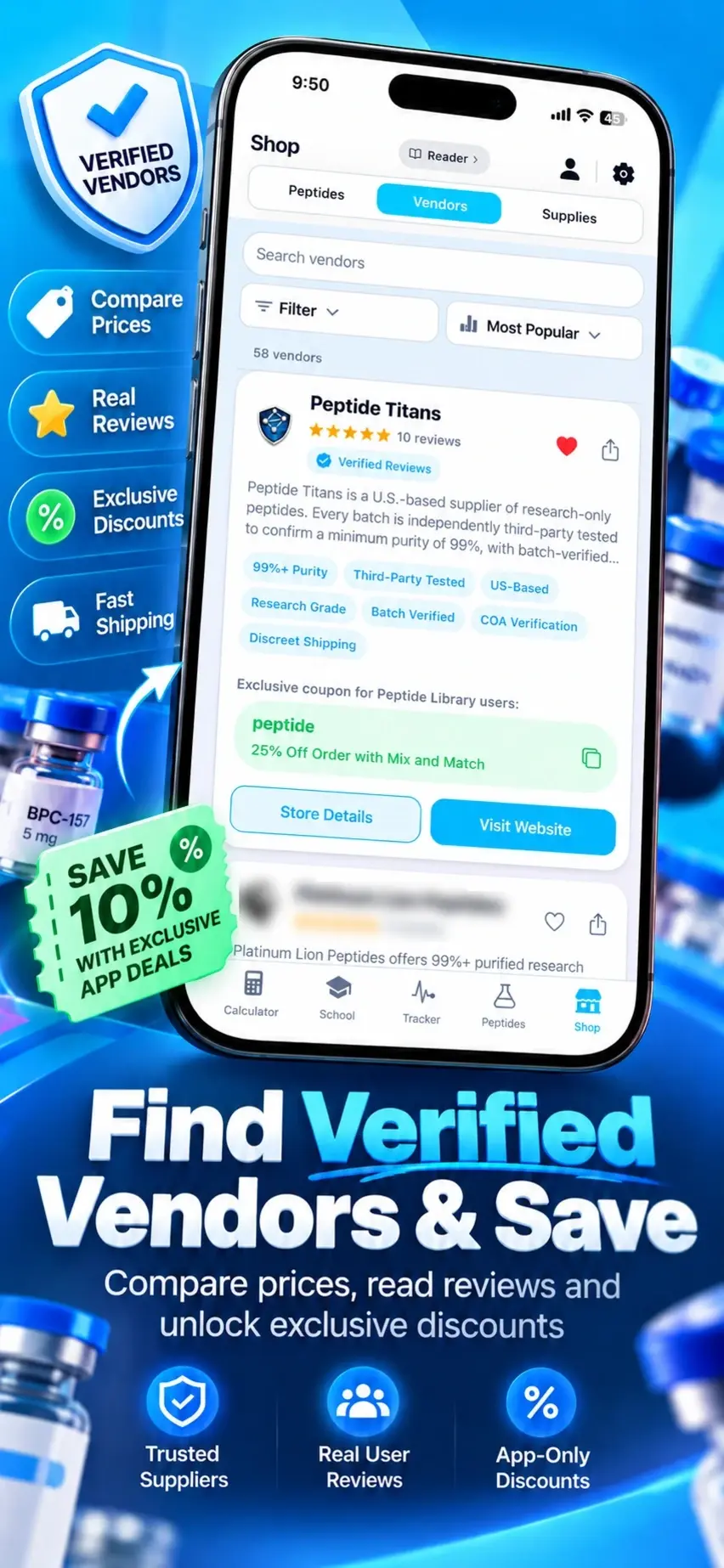
Line up vendor offers, price per mg, ratings and availability without leaving the platform. Sorted by price per mg, so the cheapest vial and the cheapest milligram stop being confused.
Independent peptide research platform
Calculate concentrations, track every dose and vial, and compare vendors across 209 peptides — from one platform.
Free, in your browser, no account needed.
Research platform onlyPeptide Library does not sell peptidesBuilt for research use only. Not for human consumption.
KLOW (GHK-Cu / KPV / BPC-157 / TB-500)
26 vendors
$1.49–$2.56/mg
SS-31 (Elamipretide)
25 vendors
$4.50–$8.00/mg
Peptide Library is an independent platform for researching peptides, comparing vendors and pricing, calculating concentrations, and tracking research. It does not sell peptides. Content is for research and educational use only and is not medical advice.
Search, compare, calculate, track — the whole sequence in one place, instead of four tools and a spreadsheet.
Search
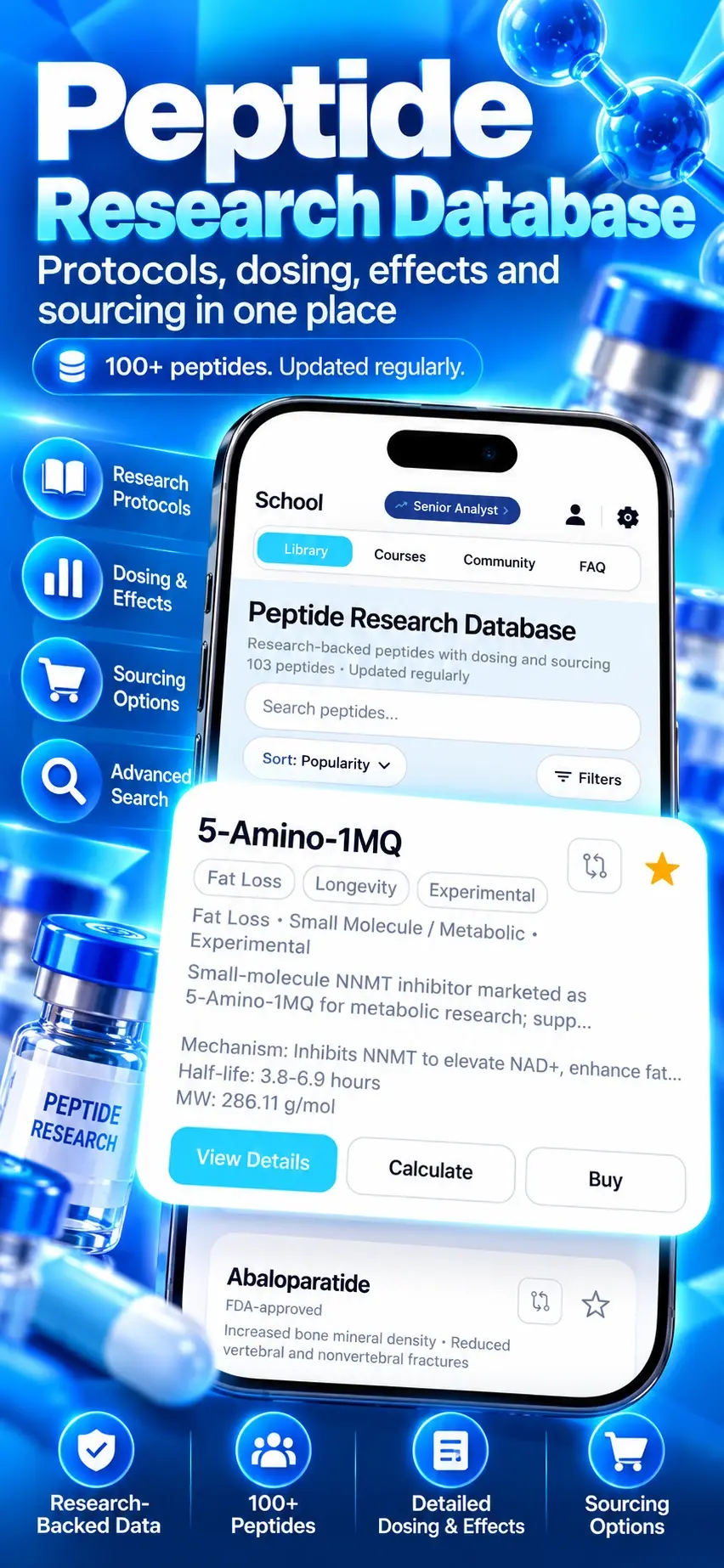
Search 209 peptide profiles by name, alias, molecular data or reference, from a single field.
Compare
Vendor offers ranked by price per mg, with rating and availability, so the cheapest vial and the cheapest milligram stop being confused.
Calculate
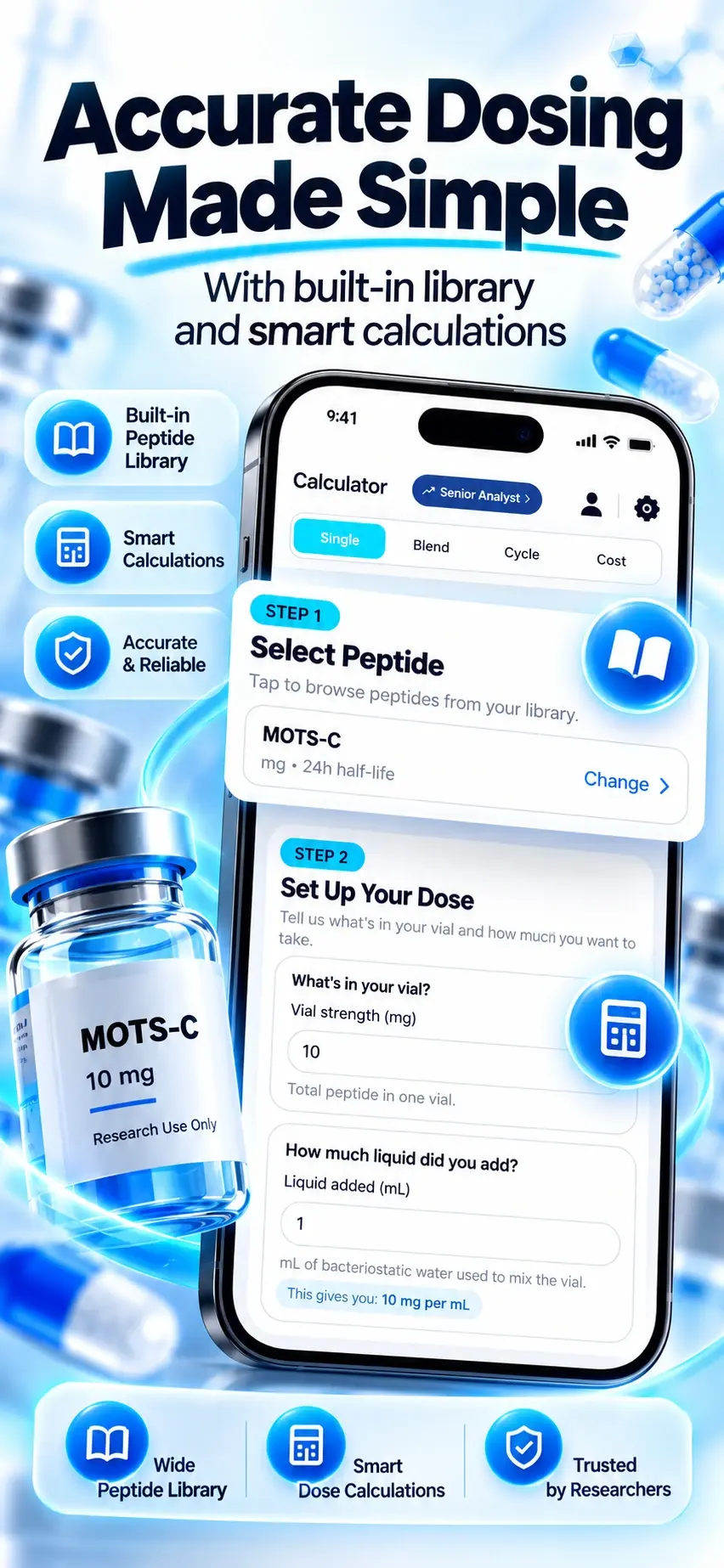
Vial amount, diluent volume and target dose resolve to a calculated volume without leaving the screen.
Track
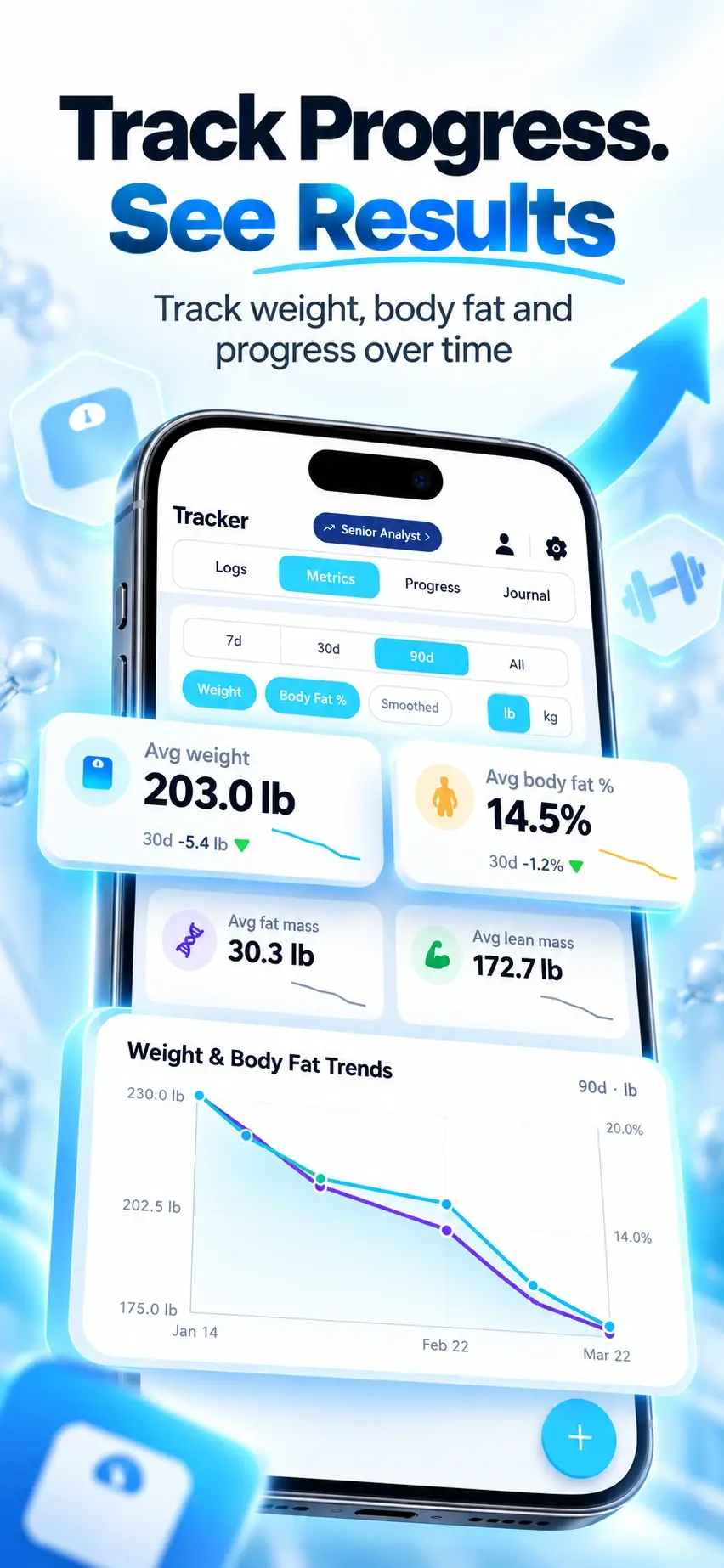
Schedules, logs, inventory, notes and metrics on one timeline, so a protocol stays consistent over months rather than tabs.
01 / Search
Structured peptide profiles with research information, identifiers, references, regulatory context and vendor comparison.
Or browse the full library by category.
02 / Compare
See vendor pricing, price per mg, ratings, and availability in one place. A cheaper vial is not a cheaper milligram.
Live offers for DSIP. Select a column heading to sort.
Compare every peptide →| Vial | Availability | ||||
|---|---|---|---|---|---|
| Peptide TitansBest $/mg | 10 mg | $44.99 | $4.50 | 5.0 (10) | In stock |
| Alpha BioMed Labs | 10mg | $47.00 | $4.70 | No reviews | In stock |
| Ignite Peptides | 5mg | $25.00 | $5.00 | No reviews | In stock |
| Peptides.gg | 15mg | $75.00 | $5.00 | No reviews | In stock |
| Amino Club | 5mg | $29.99 | $6.00 | 5.0 (1) | In stock |
| LA Peptides | 5mg | $29.99 | $6.00 | 5.0 (1) | In stock |
| Mile High Compounds | 10mg | $59.99 | $6.00 | No reviews | In stock |
| Felix Chemical Supply | 10mg | $59.99 | $6.00 | No reviews | In stock |
Sorted by price per mg, lowest first. Not a paid advertising ranking — coupons or affiliate links do not change the order. How rankings work
03 / Calculate
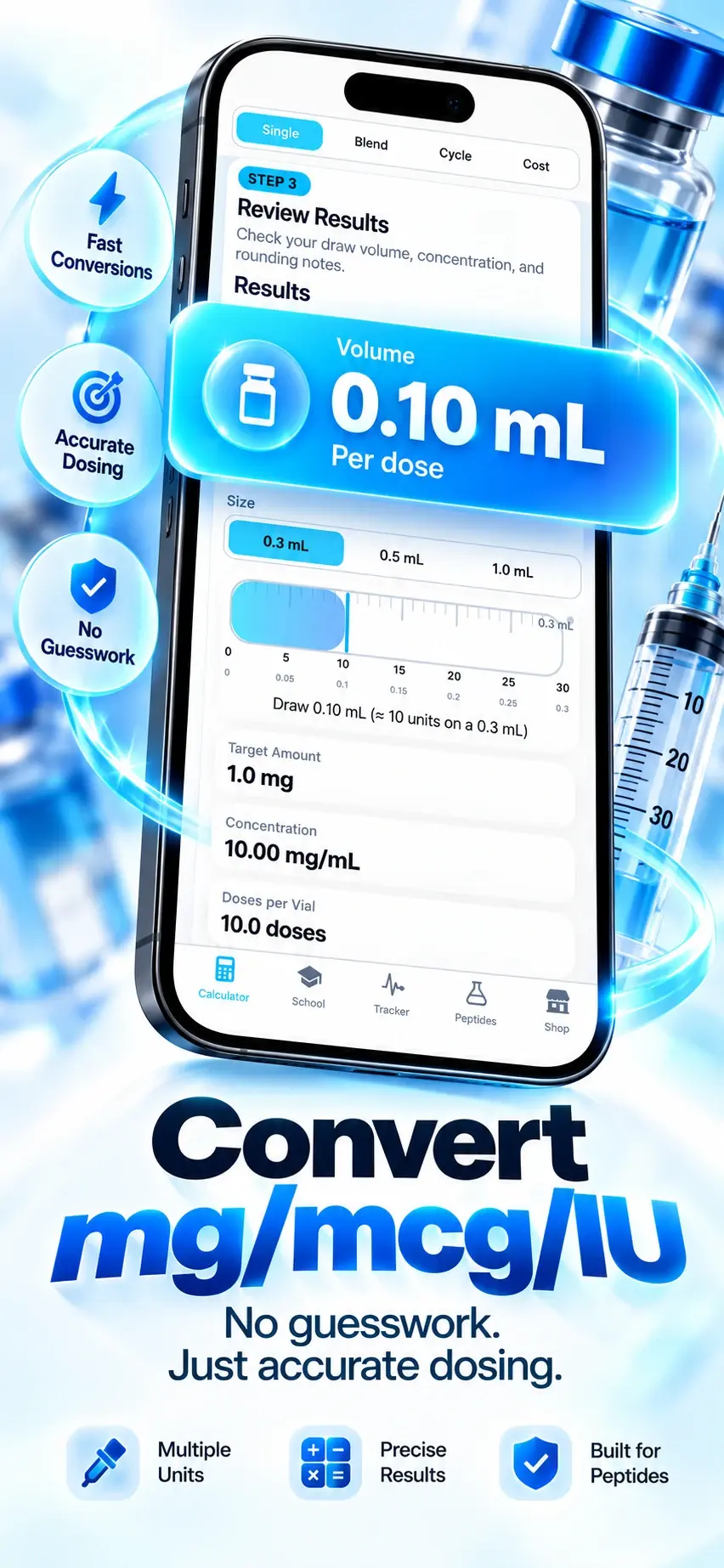
Reconstitution, dosing and blends in one flow — free, in the browser, no account needed. Every peptide profile opens it with that compound’s typical vial size already filled in.
Example calculation
An illustration of the arithmetic, not a dose recommendation. Research use only.
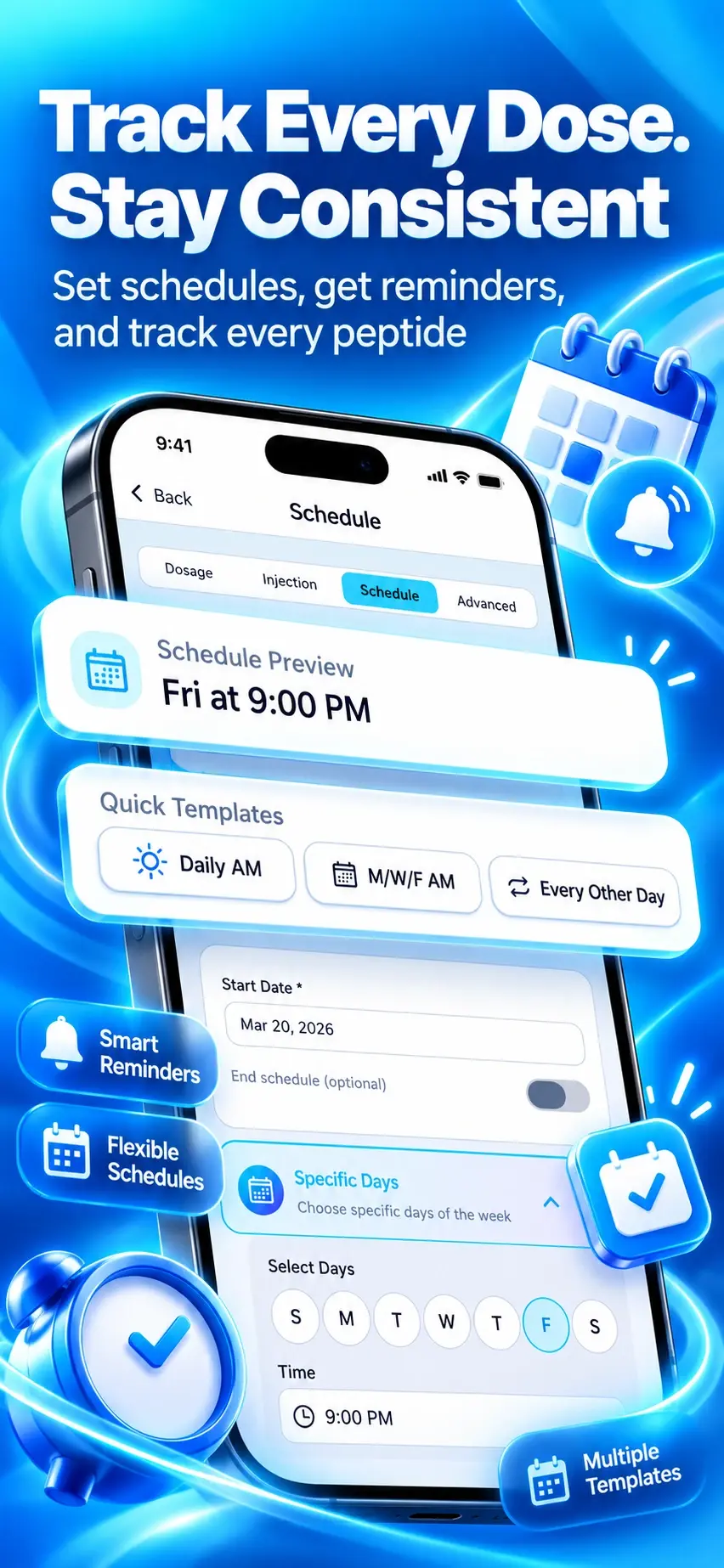
04 / Track
Schedules, logs, metrics, notes and inventory on one timeline, so a protocol stays consistent over months instead of living in a spreadsheet and a camera roll.
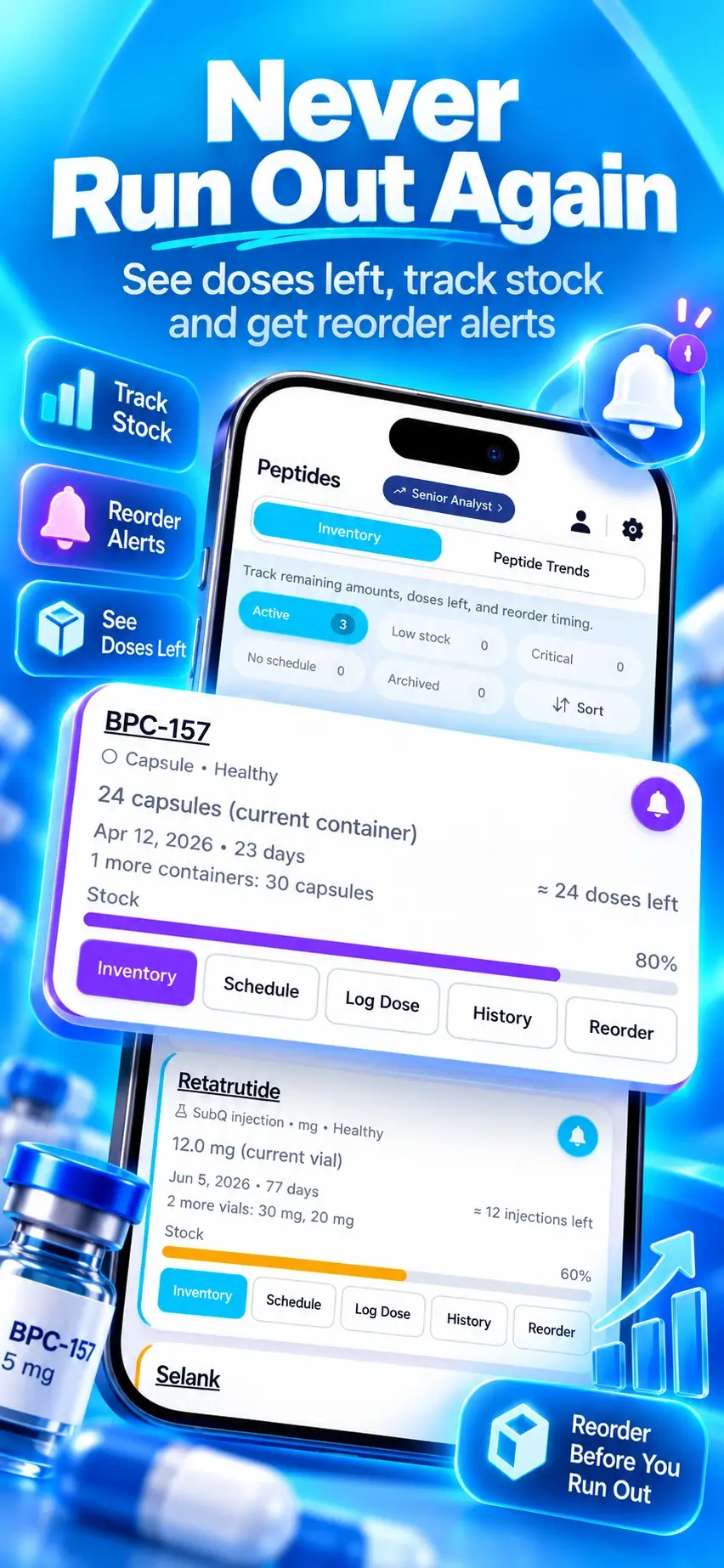
Tracking and inventory live behind a free account, and sync across devices with Pro.
Line up vendor offers, price per mg, ratings and availability without leaving the platform. Sorted by price per mg, so the cheapest vial and the cheapest milligram stop being confused.
Schedules, logs, reminders and metrics on one timeline.
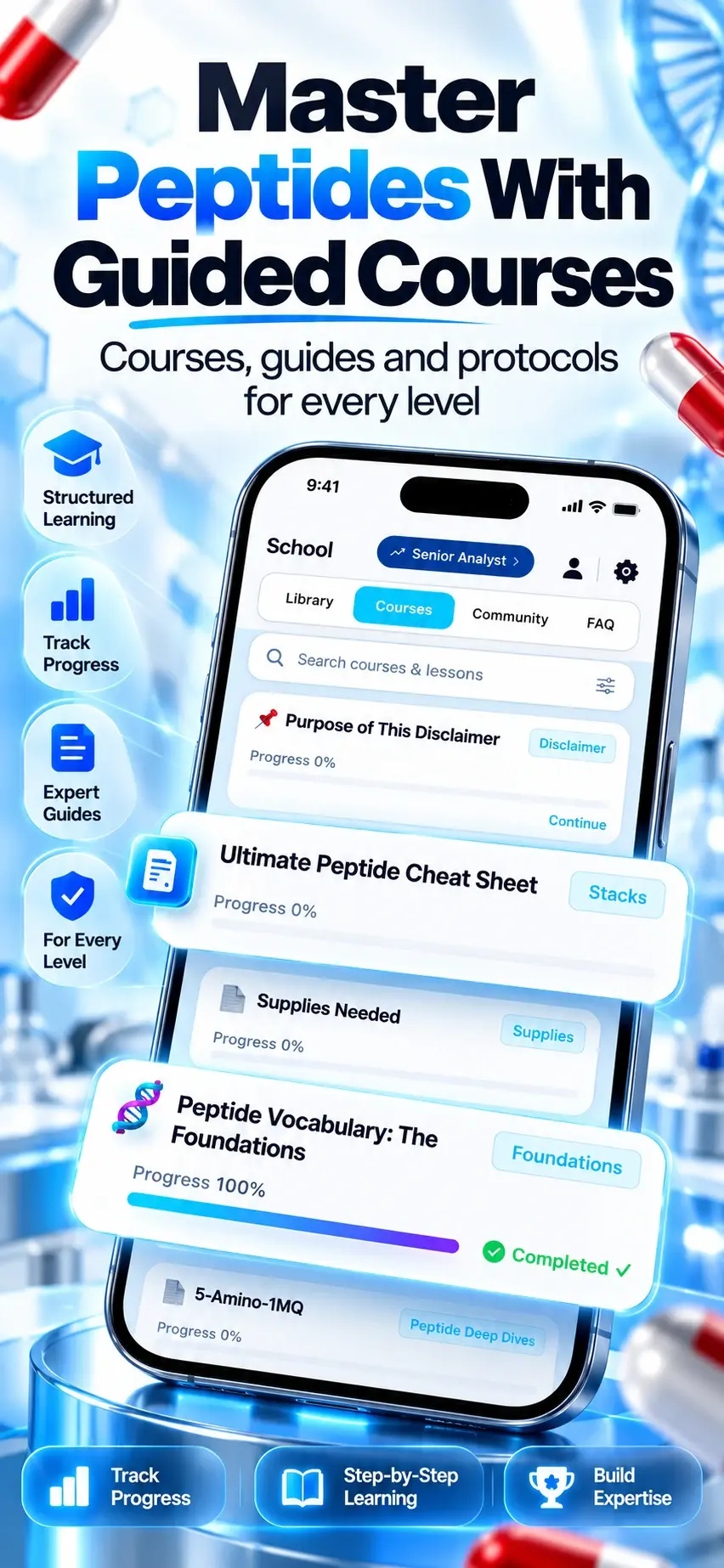
Step-by-step lessons from the fundamentals up, with your progress saved as you go.
Concentrations, units and injection volume from a single flow.
209
Searchable research records, not a static list.
58
Listed independently, with ratings and review counts.
Remaining amounts, stock levels and reorder context, so nothing runs out mid-protocol.
Keep tracker and inventory in step across devices with secure cloud backup.
Methodology
Every profile is assembled from published literature and public registries, cited against its source and dated when it was last reviewed.
01
Profiles are built from peer-reviewed literature, with citations recorded against PubMed identifiers and DOIs rather than summarised second-hand.
02
Chemical identity and regulatory context come from public chemical registries and regulator records, so identifiers can be checked against their source.
03
Citations are audited, profiles carry a review date, and corrections are versioned — so a profile states when it was last checked, not just what it says.
Read the full methodology →Editorial policy →How rankings work →
The peptides drawing the most attention on the platform right now, with vendor counts and the typical price per mg.
KLOW (GHK-Cu / KPV / BPC-157 / TB-500)
26 vendors
$1.49–$2.56/mg
View offers →
SS-31 (Elamipretide)
25 vendors
$4.50–$8.00/mg
View offers →
CJC-1295 (no DAC) / Mod GRF(1-29)
17 vendors
$7.34–$10.00/mg
View offers →
Glucagon
View offers →
Melanotan II
33 vendors
$3.50–$5.38/mg
View offers →
Humanin
4 vendors
$10.25–$26.15/mg
View offers →
Track research, calculate concentrations, manage inventory, compare vendors, and explore the library anywhere.


Over 20,000 downloads across the App Store and Google Play.
Calculator
Tracker
Inventory
Comparison, vendors, and the library stay free. Pro unlocks sync, unlimited inventory, and advanced tools in the app.
Free
$0
Research, compare, and calculate on the web.
Peptide Library Pro
$4.99 / month
$39.99 yearly or $89.99 lifetime in the iOS and Android apps.
Subscriptions are purchased and managed in the mobile apps.
“Pinning” is informal slang for administering a substance with a needle and syringe. In peptide discussions it almost always means a subcutaneous or intramuscular injection, as opposed to an oral, nasal, or topical route.
The term comes from community forums rather than clinical literature — it will not appear in a published study or on a product label. It describes only the act of injecting, and carries no information about what is being administered, at what dose, or for what purpose.
Related terms you will see alongside it
Why the route comes up so often
Most peptides are not orally active: stomach acid and digestive enzymes break the peptide bonds before absorption, which is why injection dominates the discussion. Why are most peptides not orally active? explains the mechanism.
A dose is expressed as a mass in milligrams or micrograms but drawn as a volume, and the two are linked by the concentration of the reconstituted vial. The reconstitution calculator converts between them.
Peptide Library documents this terminology for research literacy. Nothing here is instruction in injection technique, and none of it is medical advice.
Reconstitution is the process of adding a liquid (commonly bacteriostatic water) to a lyophilized (freeze-dried) peptide powder to prepare it for research use.
Peptides are shipped as dry powder for stability and must be reconstituted before use.
Yes. Your tracker, metrics, and journal data are private to your account and are not shared publicly.
GLP-1 receptor agonists are compounds that activate the GLP-1 (glucagon-like peptide-1) receptor, which is involved in glucose regulation and appetite signalling.
In research literature, GLP-1 activity is associated with:
Why "agonist" and not "GLP-1"
Native GLP-1 is useless as a drug: DPP-4 degrades it within roughly two minutes of release. Every clinically useful compound in this class is therefore an analog engineered to survive that enzyme — and often to bind albumin as well, pushing the half-life from minutes to days.
That engineering is what separates the generations. Early agonists required twice-daily administration; later ones with albumin-binding modifications moved to weekly.
Glucose-dependent is the key phrase
The insulin effect scales with blood glucose rather than firing regardless of it. That dependency is why the mechanism behaves differently from insulin itself.
Beyond GLP-1 alone
Newer compounds add other receptors — GIP, or GIP plus glucagon. See how the three receptors differ and the GLP-1 and metabolic category.
Research use only. Not medical advice.
Peptides can degrade over time. “Expiration” typically refers to the point where a compound may no longer meet a stated purity or stability expectation.
Researchers often track:
Always follow vendor guidance and lab best practices.
Vendor ratings are based on:
Peptide Library may use a combination of:
Because vendor catalogs change frequently, always confirm final details on the vendor’s website.
Price per mg is calculated using:
Total Price ÷ Total Milligrams = $/mg
This allows you to objectively compare different vial sizes, blends, and vendors on equal footing.
One research platform
Everything you need for peptide research in one platform.
Peptide Library is an independent research platform and does not sell peptides. Content is for research and educational purposes only and is not medical advice.